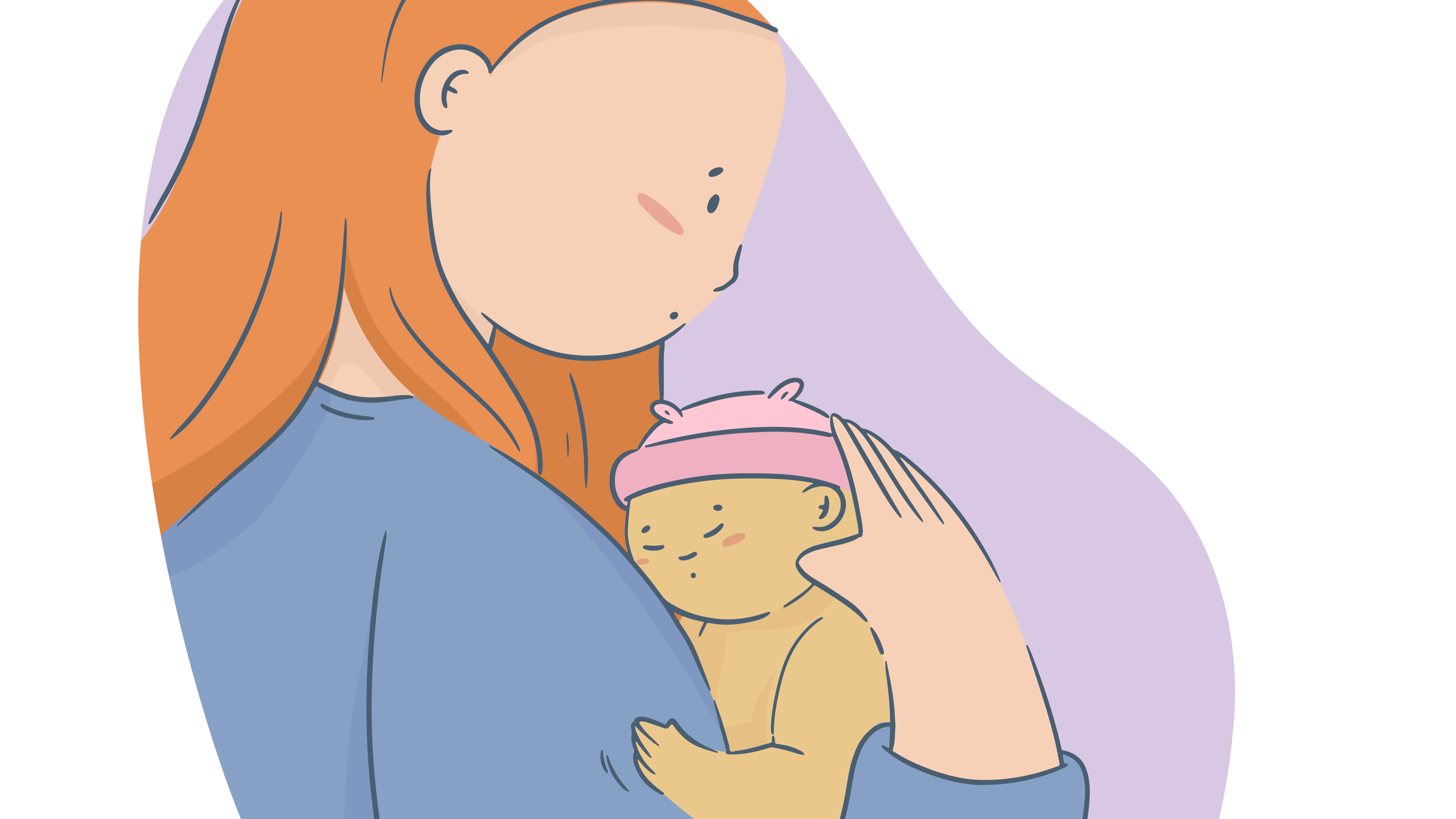
The yellowish color of the skin in newborns is called "jaundice". It may occur on the first days of life due to the accumulation of bilirubin, a pigment present in red blood cells.
The liver is the organ that sends bilirubin from the bloodstream to the gut, which in turn expels it from the body through the stools. The first days of life, the liver functions slowly; bilirubin is not cleared fast enough; it builds up in the blood, and enters all organs, including skin and brain. If bilirubin reaches very high levels in the brain, it can damage the neurons.
The first days following birth, health care teams check the babies and their skin color frequently, and may test the level of blood bilirubin. By the time the baby is seven to ten days old, the liver has matured; it manages to clear bilirubin efficiently, and the skin loses its yellowish color.
If bilirubin levels exceed certain values considered dangerous, the baby will need phototherapy. Timely therapy may spare the central nervous system from the damage bilirubin may cause.
If a baby’s skin is yellowish in the first 24 hours after birth, or if the baby’s palms and soles remain yellowish at any age, it is important to seek care promptly to determine whether treatment is required.