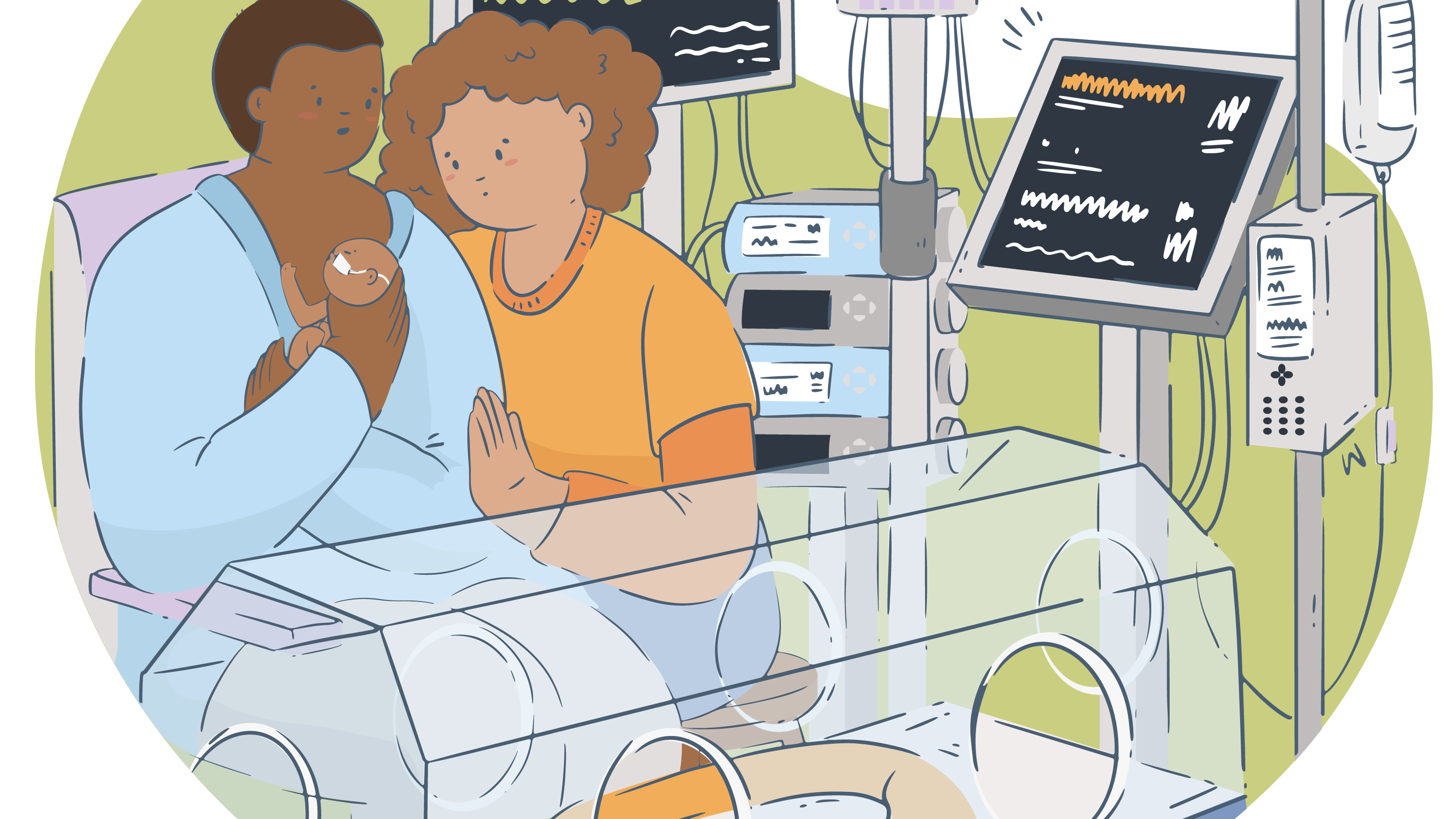
In neonatal hospitalization areas, the unrestricted admission of mothers and fathers facilitates close contact with their newborns, the development of bonding and the provision of care for which they will be primarily responsible after discharge.
Allowing mothers to stay with their babies in family-centered care models restores their leading and irreplaceable role in care, by making it easier for mothers to feed their children with their own milk. The practice also reduces the stress, anxiety and depression to which mothers are exposed during hospitalization, which can reduce milk production and discourage milk extraction.
Disruption of the bonding process during neonatal hospitalization can have devastating and long-lasting consequences for mothers, fathers, and their children.
The written policy for the breastfeeding of premature, small and/or sick people should state the facility’s position regarding their care in settings with unrestricted access for their primary caregivers, which should be expressed in the sections on:
Use of facility space
• Facilitate unrestricted parental access to the Neonatal Care Unit at all times.
• Ensure availability of the following next to the Neonatal Care Unit
- Space for mothers to sleep or rest
- Lactation room with space to breastfeed, express milk and refrigerate it for storage until the newborn is discharged
• Avoid separation of mother and baby, unless medically necessary.
Skin-to-skin contact
• Start skin-to-skin care as early as possible after birth.
• Facilitate frequent and continuous skin-to-skin contact whenever possible.
• If the mother is not well enough to go to the area where her baby is staying, arrange for both of them to get together as soon as possible.
• Teach health team members safety measures, how to monitor skin-to-skin contact, and safe transfer when putting the baby against the mother’s skin and taking them away.