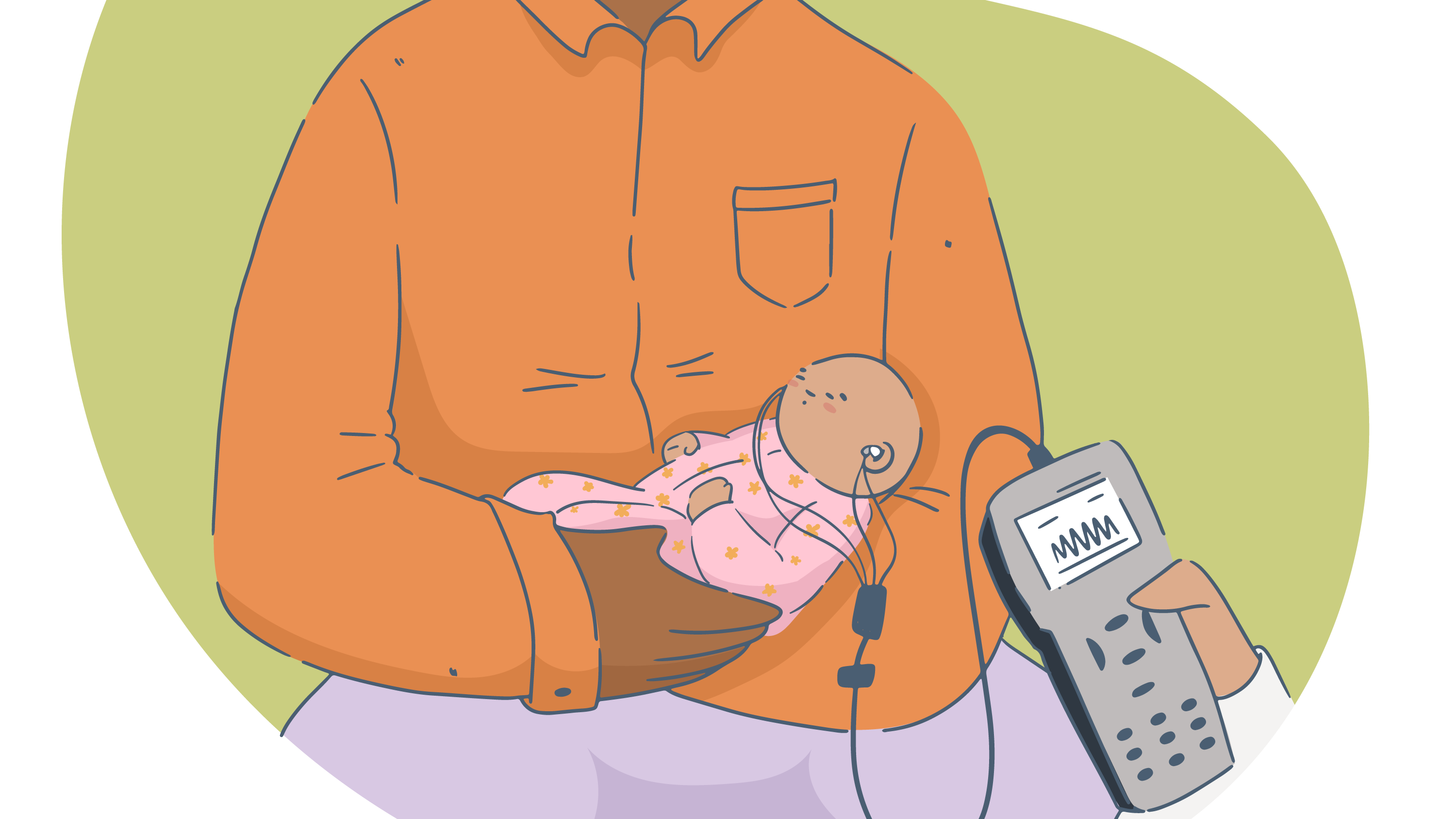
Universal newborn hearing screening (UNHS) with otoacoustic emissions (OAE) or automated auditory brainstem evoked potentials (ABEP-A) testing is recommended for early detection of permanent bilateral hearing loss (PBHL). UNHS should be accompanied by diagnostic and treatment services for infants in whom hearing loss is detected.
To formulate this recommendation, the WHO Guidelines Development Group evaluated evidence from studies with results showing high sensitivity, specificity and positive and negative predictive value of the ABEP-A test and OAEs, used alone or in combination.
Furthermore, in infants with PBHL detected by a UNHS, referral, diagnosis and treatment occur significantly earlier, and communication outcomes are improved compared to infants detected by means other than UNHS.
In economic evaluations, eleven models concluded that UNHS had favorable cost-effectiveness versus screening or selective screening.
UNHS is performed prior to discharge or at a follow-up visit after discharge. When it signals a possible PBHL (bilateral permanent conduction or sensorineural hearing loss of 35 dB or more in the better-hearing ear), definitive follow-up testing should be performed as soon as possible after screening. This involves testing by an audiologist with more detailed auditory brainstem auditory response diagnostic methods in a highly controlled environment, completed in 30 to 60 minutes.
Children's families should be informed about age-appropriate hearing and language development and communication skills, regardless of test results.
Some studies point to risk factors for infant hearing loss or hearing impairment (low level of maternal schooling, belonging to a racial minority, living in poorer urban neighborhoods). Low socioeconomic status was related to lack of participation in newborn hearing screening programs.
Low monitoring rates are a challenge for UNHS programs, especially in low- and middle-income settings.