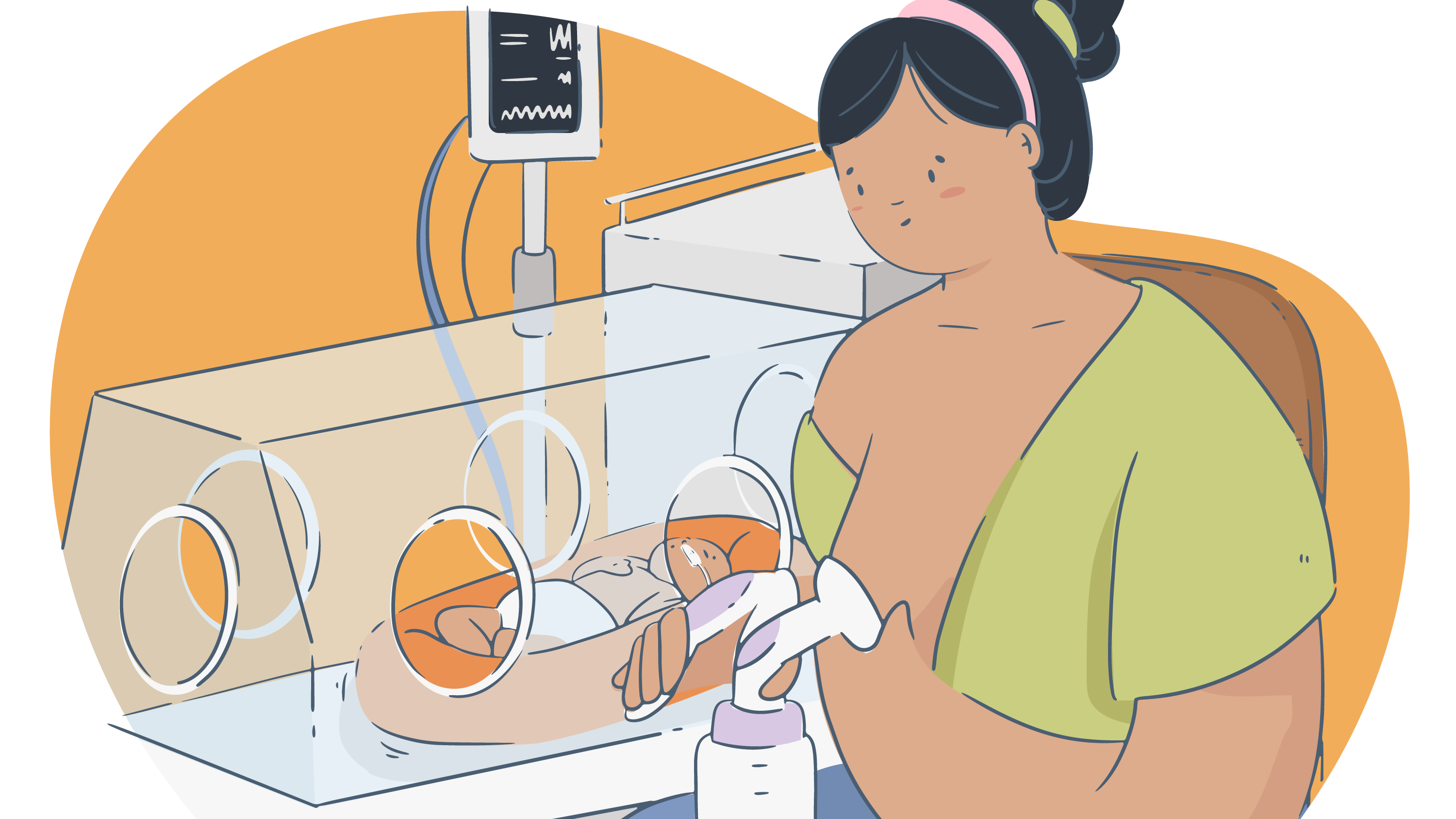
To establish lactation when an extremely premature birth occurs, it is important:
1) Manually expressing colostrum, within the first three hours after birth, initiates the milk production process and has several benefits:
- It empties the mammary gland which, together with the action of the hormones that promote labor and delivery, are a powerful stimulus to initiate milk production.
- The expressed colostrum administered to the baby provides unique properties when placed in each cheek within the first postnatal hour. Colostrum provides defenses against infection. Then, feeding at minimal volumes - the so-called "trophic feeding" allows the gut to tolerate progression to higher volumes of milk and would also provide protection for preterm infants against serious diseases, such as necrotizing enterocolitis.
2) Stimulate increased milk production and support until the baby is able to suckle at the breast. After the initial extraction of colostrum, the health team professionals help by advising the mother to:
- Continue to pump or hand express milk.
- Initiate skin-to-skin contact.
- Put the baby at the breast for non-nutritive sucking, as the baby grows and while receiving tube feedings. Suckling progressively evolves to "nourishing" as the baby matures.
All the aforementioned actions facilitate breastfeeding upon discharge of babies who required hospitalization after birth.