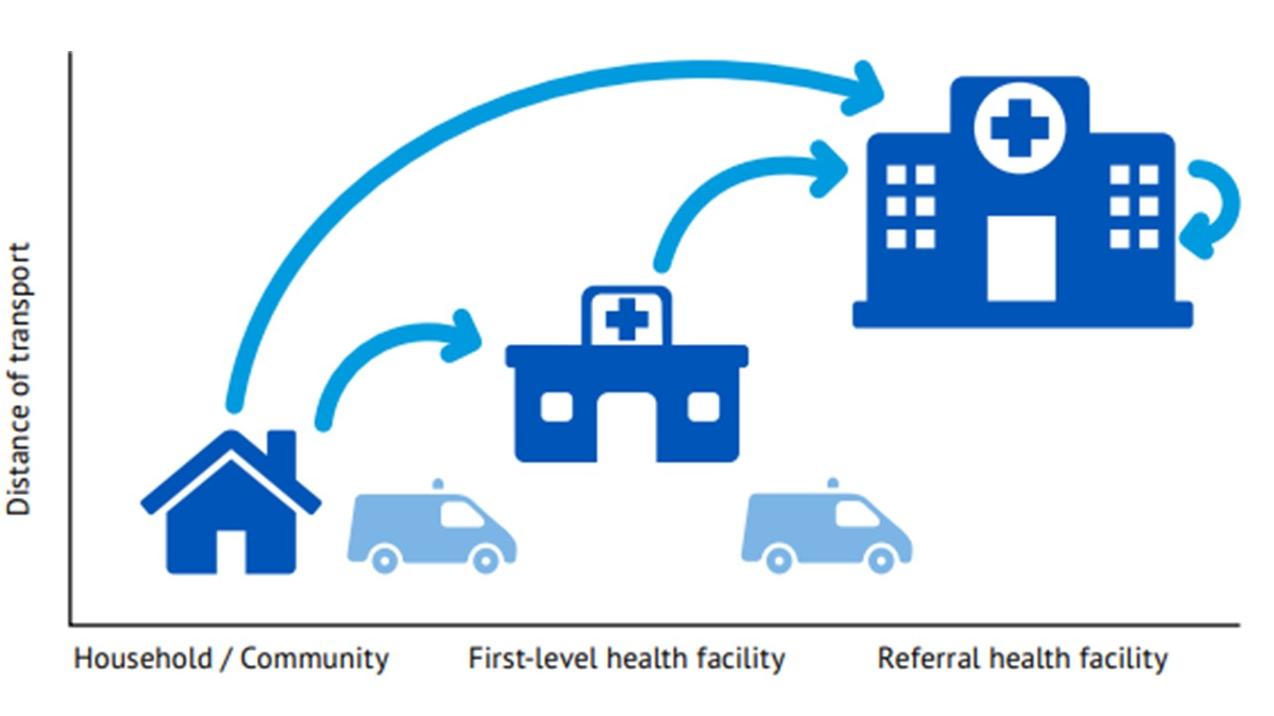
Delays in the neonatal transfer system can have an impact on mortality. The “three delays” model (Thaddeus and Maine, 1994) describes a conceptual framework for the factors and phases of delay that influence timely access to specialized emergency care. The model makes it possible to analyze delays in the process at each stage of neonatal transfers.
In most cases, neonates are transferred from a primary care center to a referral center, but it can also occur from the community, from a facility or from within the same center.
In neonatology, these crucial delays are a major contributor to neonatal mortality, and include:
I) delays in the decision to seek medical care (potentially resulting from various reasons such as socioeconomic and cultural factors).
II) delays in reaching an appropriate health care facility
III) delays in receiving adequate care once the newborn has arrived at an appropriate medical facility, due to shortages in staffing, equipment, or facility management issues.
The problems involved in phase II include the ability to reach an appropriate facility and the time it takes to do so, as well as the associated morbidity and mortality. These delays are more frequent and often severe in developing countries, particularly in rural areas, where medical specialty services, trained health care professionals and transportation means are scarce.
Phase III relates to delays or problems in the quality of care of newborns after their arrival at the medical center. Phase III issues are morbidity associated with lack of communication prior to or upon arrival at the medical center and morbidity associated with transporting newborns within the center for diagnostic or surgical procedures.