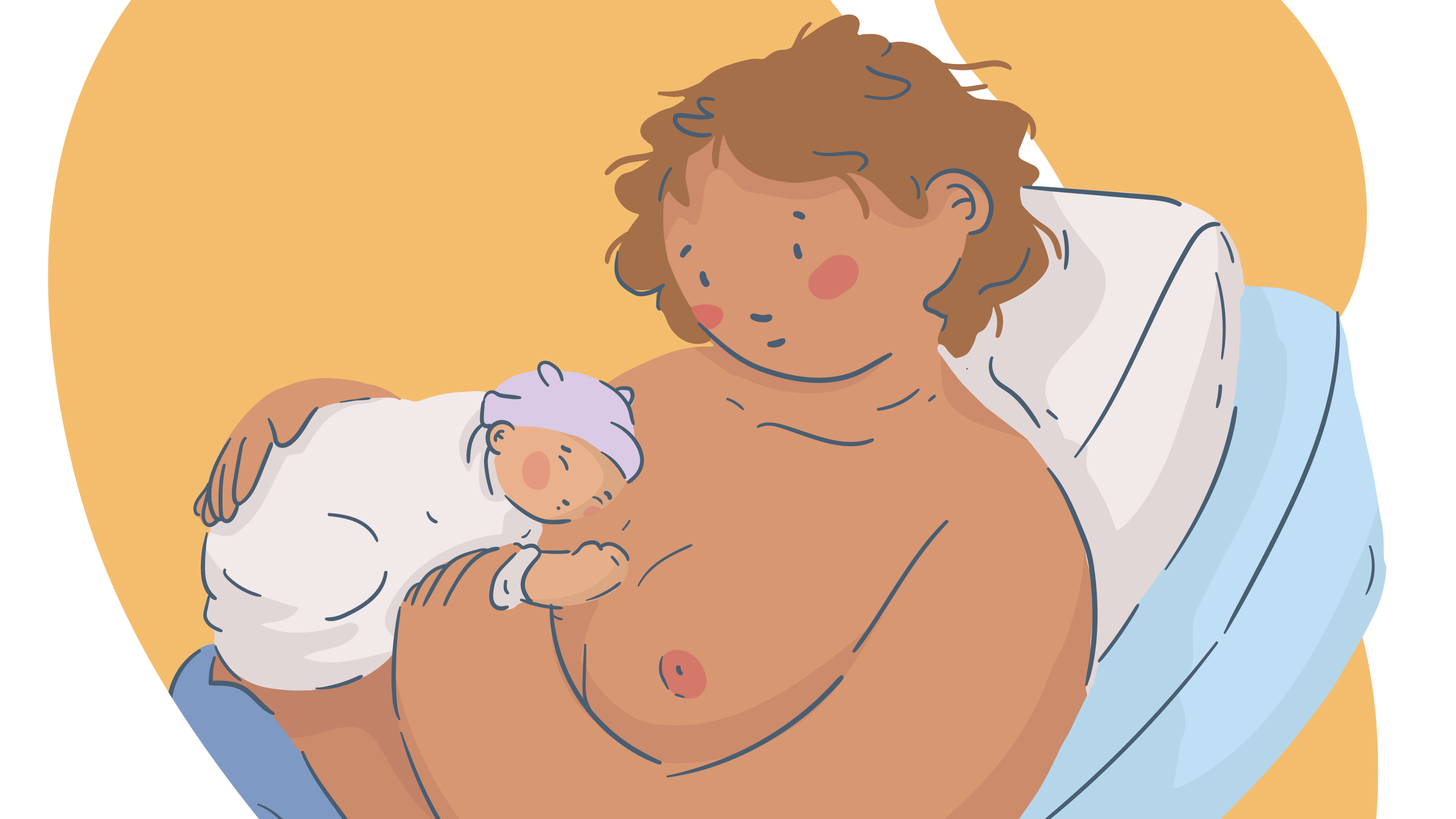
Prolonged skin-to-skin contact of newborns with their mother during the first postnatal hour favours the initiation of breastfeeding and subsequent support.
In the first hour after birth, babies have the ability to initiate breastfeeding on their own. At birth, after gently drying them, newborns are placed face down directly on the skin of the mother's abdomen and chest, without interferences between mother´s and baby´s skin. Skin-to-skin contact during the first hour of life makes it easier for the baby to maintain its body temperature, recognize sounds (including voices), calm down and reach the goal that smell, and sight indicate: the mother's breast. To accomplish this, babies need approximately 45 minutes to two hours after birth.
It is extremely important to allow them to start breastfeeding as soon as they show signs of being ready, without forcing them, and not to interrupt this contact.
It is recommended that skin-to-skin contact be immediate at birth, or as close as possible within the first 30 minutes and continuous, without interruptions. Only a serious medical reason could justify the mother's separation from the newborn. When breastfeeding is initiated under these circumstances, it favors its establishment and support, and mother and baby acquire the security to breastfeed.
Early contact, including touching the nipple, can have effects on overall maternal behavior and on mother-infant bonding, and is therefore recommended regardless of the decision on how the newborn will be fed.